


Being trapped in a sinking car is an absolute nightmare. But if you know what to do, you can save your life. Every second counts as soon as water enters the car – staying calm and acting quickly is vital for survival.
This guide will show you how to escape safely and quickly from a sinking car in an emergency.
Why swift action is crucial
A car doesn't sink immediately when it drives into water. You usually have a short window of time – about 30 seconds to a few minutes – before the car goes completely under. During this time, the water pressure on the outside increases significantly, making it almost impossible to open the doors.
That's precisely why preparation and the right approach are so important.

The most important steps to escape from a sinking car
1. Stay calm and get an overview.
Panic is your worst enemy. Take a deep breath and focus on what's important right now. Only call for help once you're outside – your escape is the top priority.
2. Immediately unfasten the seatbelt.
First, unbuckle your seatbelt. Many people forget this in a panic – and a fastened seatbelt makes any movement impossible. Also, make sure that passengers, especially children, unbuckle their seatbelts.
3. Forget the doors – take the windows.
The doors are almost impossible to open due to the water pressure. Your only option is the windows.
-
If your car has manual window cranks: Roll the window down immediately while the car is still floating. Once the water has risen, it becomes almost impossible.
- If you have electric windows: Press the button immediately before the water disables the electronics.
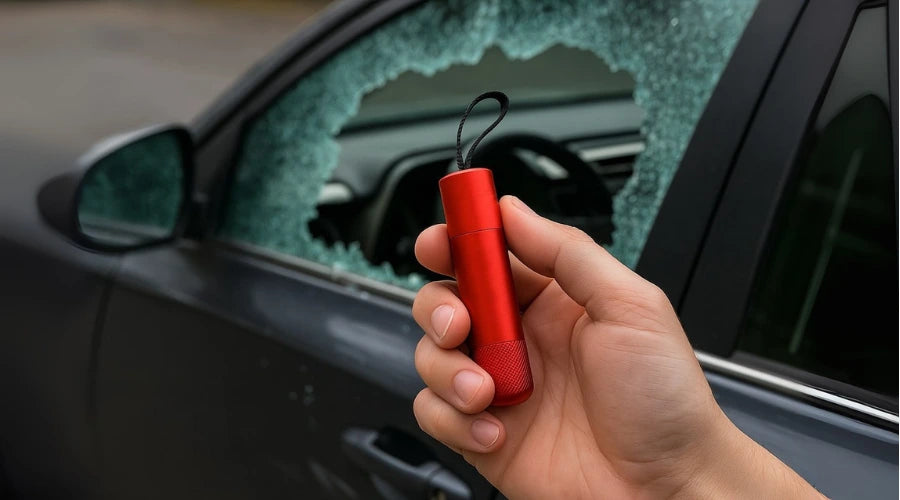
4. If necessary: Break a window
If the window won't open, you'll have to break it. Aim for the corners or edges – that's where the glass is weakest.
- It's best to use a special glass breaking tool. Keep it handy at all times – for example, on your keyring or in the glove compartment.
- If you don't have one, pull out the headrest and hit the window with the metal rods.
5. Help your fellow passengers
As soon as your exit is clear, help others get out. Start with children or people who need help. Every second counts – so act quickly.
6. Go out feet first and swim to safety.
Slide out feet first. This way you can push off from the car and swim towards the surface. If you lose your bearings: Follow the air bubbles upwards.
What to do after you're outside
Once you're out of the car:
- Swim immediately to the surface and away from the car so that the current doesn't pull you under.
- Call the emergency services as soon as you are safe and report the accident.
- Get yourself and others checked out – especially after exposure to cold, shock, or injuries.
This way you'll be better prepared
Preparation is key to surviving such emergencies. Here's what you can do:
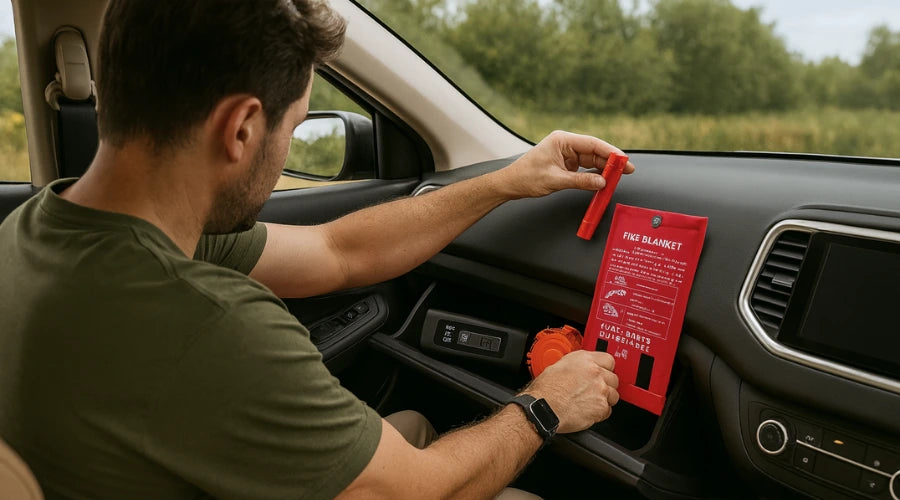
Keep an emergency tool readily available.
Buy yourself a combination tool that breaks windows and cuts seatbelts. The best models are small, lightweight, and fit on your keychain or in your car.
Get to know your car
Familiarize yourself with the windows and locks. Knowing your car can save crucial seconds in an emergency.
Practice emergency procedures with your fellow passengers.
Teach your family, especially the children, how to escape from a sinking car. Practice together calmly so that everyone knows what to do in an emergency.
Secure loose items
Heavy or sharp objects in the car should always be secured – they can become dangerous in a crash.
The golden rule: Act immediately
Most importantly: Don't wait! Every second of hesitation increases the risk of the car sinking completely – and then it becomes almost impossible to escape.

Conclusion
Experiencing a sinking car is one of the worst situations imaginable. But with the right knowledge and tools, your chances of survival increase dramatically. Remember these steps, keep a glass-breaking tool in your car, and drive especially carefully near water.
Remember: Preparation saves lives. Share these instructions with friends and family so they too can react correctly in an emergency.


